What are Performance Chips
Performance chips: What are they?
Automotive Products, Services, and Articles
EPROM Tuning Chips
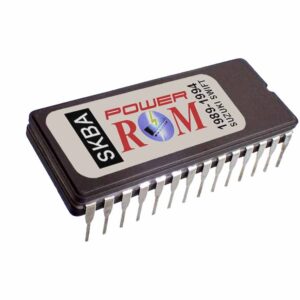
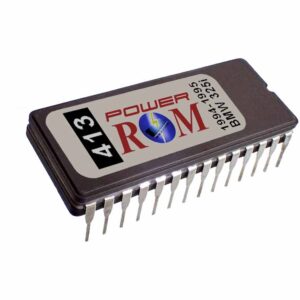
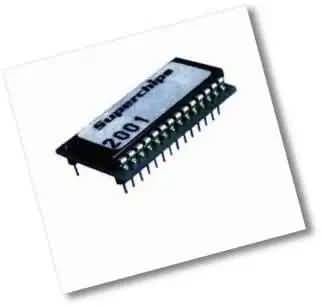
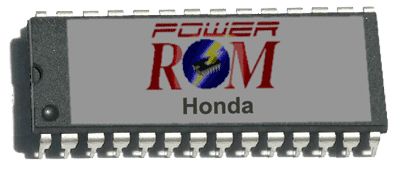
The chips referred to when talking about performance chips are EPROM memory chips or Flash EPROM memory chips which contain a program for running the engine (inside the ECM), that is similar to the manufacturer’s programming, except for some parameters that have been modified by someone (the tuner) for accommodating new hardware, like bigger injectors, any type of boost induction, different engine cams, etc, or just to produce the most power, out of the already existing hardware (stock engine for example).
The above is the original concept of a “performance chip,” or “chip tuning. Nowadays, you will see the same concept also applied to “piggybacks”, resistor chips, and other devices, including scams.
Flash Tuning Chips
Flash EPROMs are similar to earlier EPROM chips, but they are a newer concept; they can hold a larger memory size, are faster, and can be erased and rewritten electronically, unlike regular EPROMs, which needed an ultraviolet-light tool to erase them so they could be used again.
Another feature of Flash EPROMs is that they can be erased instantly or in a “flash”, which is where their name comes from. Other memory types that could be erased electronically had to be done sequentially or by pages, which is, one block of a specific memory size at a time. Flash EPROMs are used in modern cars and can not be used in older models. The 1994 VW Jetta, for example, uses a 27C512 EPROM chip, while the same model from 2001 uses a Flash EPROM 29F400, and the two are not compatible in any way. So we are discussing older and newer memory chips used for chip tuning as a comparison, but they are not interchangeable.
Piggybacks
The “piggyback” is a circuit, mostly a separate computer, that will intercept the signals coming from the different engine sensors to the ECM and will modify those signals before feeding them back to the ECM, so the ECM takes different actions, like injecting more fuel, advancing ignition, and so on. This, of course, will not exceed ECM parameters because it works in parallel with the ECM, but the ECM still controls and acts on the outputs (injection, ignition, etc.). The benefit of these systems is that they are easy to program and set, and the user can adjust the parameters to their liking. Examples are “Apexi” and “Unichip”.
“Resistor Chips”
The “resistor chip” is essentially a resistor. Like the piggyback, the concept is to modify a sensor signal, usually the IAT, before it goes to the ECM. The ECM then adjusts in favor of performance. This is a passive modification, unlike a programmable piggyback, and it often doesn’t work as intended. It modifies only one signal, like the IAT sensor signal or the AFR sensor (upstream oxygen sensor) signal. It attempts to make the ECM “think” the incoming air is colder than it actually is, that way, it expects the ECM to inject more fuel.
EPROM Chip Important Characteristic
EPROM chips have an “access time” specification, which is the time it takes to output data after it is requested. For microcontrollers inside the ECM running at “X” speed or “X” MHz, the access time must be low enough for uninterrupted data communication and processing. Since ECMs that use these EPROM chips do not run at the high speeds your laptop does, an access time of 200nS (200 x 10^-9 seconds) is standard for those chips (up to 1995 models). If you use any EPROM slower than 250nS, the ECM may fail to read it.
Origins of Tuning
The original concept of “tuning” came from cars with carburetors. They had to be constantly tuned to maintain optimal performance, so tuning meant optimizing, not adding performance beyond factory specifications. It was common to re-gap the spark plugs and recalibrate the ignition distributor contact points, and clean the carburetor needles or jets. Now we use the same concept for electronic fuel injection systems, but differently. Now it refers to gaining power, either in horsepower, torque, or both. It is hardly only about optimizing.
Another common “tuning” concept on the Internet is painting and remodeling your car’s appearance. People often do this through a computer design program, but that has nothing to do with the focus of this article. They just call it “tuning”, not “chip tuning”.
Does this chip tuning work if no modifications are made to the engine?
Yes, it can deliver moderate results. There is always a window for more performance because (1) there are laws regulating the emissions produced by the engine, and (2) the need to use low-quality (low-octane) fuel for economic reasons. Both reasons lead manufacturers to program ECMs to produce less power than the engines naturally can. The ECM is programmed with the limits needed to achieve those goals. With chip tuning, you reprogram engine parameters to try to regain the power lost to regulations. This leads to another question: Is it legal? In most cases, probably not. If you modify your car mechanically or through programming, it may fail the emissions test. Another thing is that, in some countries, the speed limit a car can reach is limited by law to 180 km/h (112 MPH), and that limit is programmed into the ECM too. If you modify the ECM so the car can go faster than 180 km/h, it’s illegal in those countries.
Other Modifications
Besides EPROM chips, piggybacks, and resistors, people try other methods to get more power out of their cars. One example is a direct connection to the engine fan, with the claim that keeping the engine cooler allows for more advanced ignition timing and more power. Their rule is that for each certain number of degrees cooler, it allows an extra degree of ignition advance. Another modification I have often seen is the EGR, or “Exhaust Gas Recirculation.” This system is installed in all cars. It allows a certain amount of exhaust gas to be injected back into the intake manifold when the engine is not at idle speed. This is done (1) to keep the temperature of the engine lower and (2) most importantly, it helps reduce nitrous oxide emissions produced by the engine in the combustion cycle. Nitrous oxides only happen at high temperatures and high pressures. If the combustion chamber gets hot enough, it mixes nitrogen with oxygen, producing nitrous oxide gas, which, like carbon monoxide, is poisonous. Where does the engine get the nitrogen? From the same place it gets oxygen: the air in our atmosphere. The atmosphere is about 20% oxygen, 79% nitrogen, and 1% other gases. That’s the air we breathe.
So why do performance enthusiasts want to modify or eliminate EGR? Because recirculating exhaust gas introduces inert gases to the intake, producing less power. Less oxygen and lower combustion temperature mean less power. But we are talking about only 1 horsepower or less. The EGR valve remains closed (deactivated) at low engine speeds to avoid disturbing idle or cruising speeds and opens at a certain engine speed, so in reality, there is no perceptible difference. It is also illegal in many countries.
Another modification is a fully reprogrammable system, but fewer are purchased because they are expensive, and often an expert is required to do basic programming just to start the engine, then move on to a complete tune. These units need to be programmed from zero to match your car’s engine functions and parameters, but the manufacturers often offer “templates” or basic programs for different car models. Once it’s working, you can adjust parameters to optimize the engine even further.
Back to Chips. What Changes Are Made?
As mentioned earlier, we make an exact copy of the stock software, then modify certain parameters based on your purpose and needs.
The modified areas usually include “Fuel Maps”, “Ignition Maps”, “Air Flow Maps (MAF)”, RPM limiters (Revlimiter), Vehicle Speed Limiters (Speed Governor), the EGR (Exhaust Gas Recirculation), Variable valve timing (VVT-i, VTEC, MiVEC, Vanos, etc.) and some sensors like “Knock Sensors”, “Oxygen Sensors”, “Barometric Pressure Sensors” and “Manifold Absolute Pressure (MAP) Sensors”. The ECM controls all of these.
The tuner, the person trained to do these modifications, knows what modifications to make and to what level. Most of the time, they use specialized tools and software. But the tuner does not necessarily know where in the ECM program memory the parameters that he or she needs to modify are. That is the job of a team of researchers that develop systems to do so. Instead, the tuner knows what to do in terms of injector opening timing at certain RPMs, or at certain engine loads, how much ignition advance in degrees, and stuff like that. Then the software takes care of the rest.
Protected Chips and Piracy
Since the experimentation and development of good and effective performance chips takes a lot of money, time, effort, and knowledge, and the means to do it are often exclusive, performance chips are often protected to avoid illegal or unauthorized copies.
Unscrupulous people keep copying and selling others’ work to make a few bucks off their hard work and investments. This is not only unethical but also hurts the market. When a company or a group of people invest thousands of dollars in developing a product and cutting costs to the most they can, so the product can be sold at a competitive price, and another group of people who haven’t invested a penny on the project, start copying and selling the product at a small fraction of the original price, the market value for that product falls, or at least, is seen as less valuable. Why would someone pay $299 for a chip if others offer the exact same copy for $50?
To avoid that scenario, some chip developers have had to invest in another product, which, of course, raises the product’s final price even more. That other product is the “anti-copy” socket, in combination with an encrypted chip, to protect the chip contents from being copied.