Loose parts in engine bay caused the vehicle to stall
This is how a simple situation caused a car to stall completely at random times with no apparent cause. This could happen to any car, though engine computers have already corrected this bug. This is just an example of how unsuspected simple things can bother a well-thought-out system, or, “apparently” well-thought-out.
For some time, we wondered about the cause of an intermittent power loss in one of our customers’ cars that seemed to have no cure. All the engine parts and electronics we checked tested, and most had been replaced with brand-new parts.
After testing, we traced the problem to the ignition system. The scanner reading showed a sudden drop in ignition timing advance to a lower-than-usual level (BTDC angle) when the problem started showing.
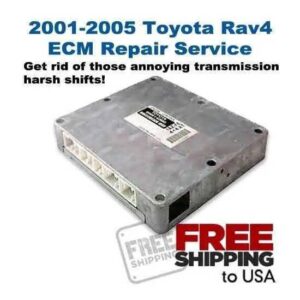
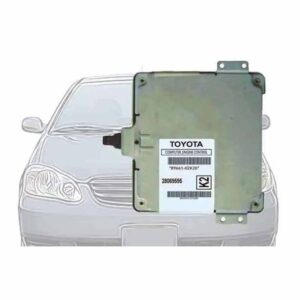
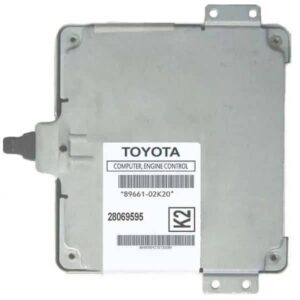
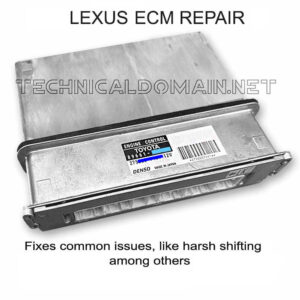
Of course, it was logical to first check the spark plugs, ignition wiring, and other ignition-related parts, but everything tested good, and as mentioned, we replaced most parts to clear the doubt. We removed the engine control module (ECM) for inspection, as we were almost sure the problem was there. To our surprise, the ECM was good too. We tested it in a similar car, and it did not fail at all. Running out of ideas for the possible cause, we reviewed the facts one more time and started looking through our diagrams for electrical components that could be associated with the sudden drop in ignition timing under “normal” circumstances. I mention normal circumstances because until then, we couldn’t find any damaged or faulty parts.
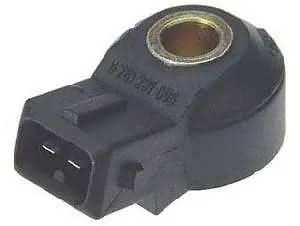
After reviewing the diagrams and the operating theory in our diagram system, we realized the only part that could suddenly lower ignition advance in the model was the knock sensor. When the knock sensor detects a knock or detonation, also known as an “engine ping”, the ECM lowers ignition timing in an attempt to get rid of the knocking, which commonly happens if the ignition timing is too advanced. Knocking or detonation is normally a result of a too-lean air/gas mixture, where the air-to-fuel ratio in the combustion chamber at the moment of igniting the mixture is higher than 14.7. Excessive compression or heat can also cause detonations, which happen when ignition timing is too advanced. That is why the ECM software was programmed to lower ignition timing when it detected knocking.
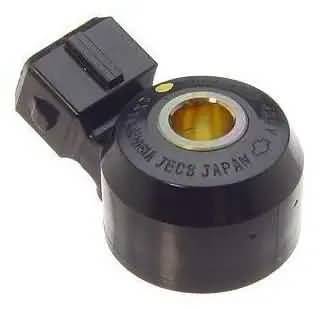
So we replaced the knock sensor, convinced we had finally found the problem. We were shocked to see the problem return after a few minutes of driving. The worst part was that it was intermittent, and we couldn’t reproduce it consistently, which made it harder to troubleshoot.
Then it occurred to us that the ECM was working fine and the sensor was brand new, so maybe the sensor was doing its job. Maybe the engine was producing knocking, and we were somehow unable to hear it or notice it. So the next step was to keep the knock sensor connected, but withdrawn from its place. The problem went away, so we concluded that knocking was happening but was unnoticeable.
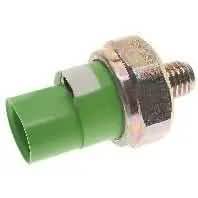
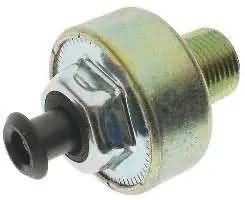
Knock Sensor
The problem was that knocking is not a quiet noise. It’s easy to spot when it occurs, and engine compression, ignition timing, and AFR were at the correct values. How can the engine produce knocking and still run so smoothly? The scanner-plotted charts were perfect…
We thought that knock sensors detect knocking only by sound. It is a piezoelectric part that acts as a microphone, and a circuit then filters the sound it picks up, ruling out everything that isn’t knocking. We immediately thought a “false” alarm was triggering the knock sensor, and then we remembered a loose metallic part near the exhaust manifold that sometimes made a high-pitched noise when it vibrated. We fixed the part, secured it in place, and that fixed the issue!
Apparently, the metallic part was creating a knocking-like noise from engine vibration, and the sound “confused” the ECM into “thinking” it was knocking.
Even with the advanced filtering system built into the ECM, the vibrations from this metallic shield either weren’t filtered out because of a glitch in the filter-circuit design, or the generated noise was too similar to engine knock, fooling the ECM.
Engine knock is very specific to each car or application, and it will not “sound” the same across models. To our ears, all engine knocking may sound the same, but to a sensitive, high-speed computerized circuit, it can sound different across models. Though many ECMs are compatible with similar car models, each model’s ECM has different programming and filtering systems. Swapping ECMs may work for many, but may fail for some others.
Something that looked harmless was causing huge trouble for that car, and it took a lot of time and effort on our part. The learning was worth it, though.