About Toyota Rav4 Ignition Coils Replacement
While this article covers the 2001-2005 Toyota RAV4 models, it also applies to other Toyota models, RAV4 models from other years, and even other car makes.
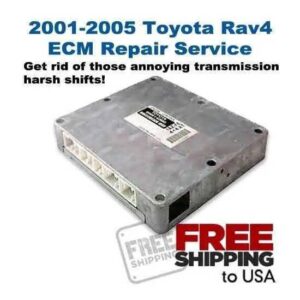
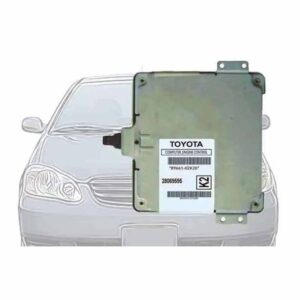
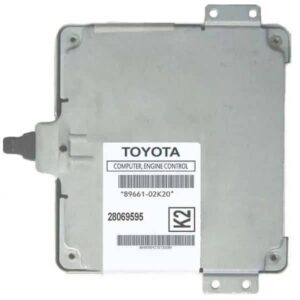
In the 2001-2005 Toyota RAV4 models, the most common problem is a known ECM malfunction (manufactured by Fujitsu Ten), which causes erratic issues with the automatic transmission. When this happens, have the ECM serviced as soon as possible to avoid internal damage to the automatic transmission (you can find our professional ECM repair service at this link -> RAV4 ECM Repair Service).
Ignition Coils
The second most common problem we have found in 2001-2005 RAV4 models is a sudden engine issue that can be intermittent or fail steadily. This problem is caused by cylinder misfires, and most of the time it happens because one or more ignition coils fail. In many of those cases, more than one coil fails at the same time.
As you probably know, RAV4 models, like many other modern vehicles, use one independent ignition coil per cylinder. In the 2001-2005 RAV4, there are 4 ignition coils in total (for the 2.0L and 2.4L L4 engines).
Diagnosis
If you experience cylinder misfires, it is probably a failing coil(s), and the only way to know which coil (s) are failing is to use a scanner and run a trouble code scan. You can do this with any handheld generic scanner. It doesn’t have to be expensive or a special model. If the scan shows any cylinder misfire codes (table below), that information will tell you exactly which cylinders are misfiring, eliminating the guesswork. Each coil has an integrated feedback circuit that tells the ECM when a coil fails to fire.
Interested in the full wiring diagram of the ECU connections of the 2001-2003 Toyota RAV4?
(ALWAYS check your SPAM folder in case that you don't see the download in your inbox.)
Your information is safe with us. We take privacy seriously and DO NOT sell or share your information in any way.
Your data will only be used for sending the requested document(s) and for emailing any related information or material that we might offer in any future. If we do so, you will always be provided with a link for unsubscribing if you desire to do so.
You’ve probably seen videos where people look for a failing coil by removing one coil at a time while the engine is running. If removing an ignition coil makes no difference to the engine problem, then it’s likely the damaged coil. If the problem gets worse, the pulled coil was working OK, so keep testing the other coils. The problems of doing this that way are;
- There is a risk of electric shock.
- You may cause problems or damage electronic equipment, like the ECM, by disconnecting electrical parts while the engine is running.
- If more than one coil is failing, the engine may shut off before you reach the problem, making it more difficult and confusing.
- Disconnecting a good coil can send unburnt fuel past the exhaust manifold. If too much fuel gets through, it may damage or break exhaust components if it suddenly ignites. For example, the second O2 sensor, the catalytic converter, and the muffler.
Replacing the faulty ignition coil(s) will probably solve the problem, but remember that the unreplaced coils will have the same mileage and use as the damaged coil(s) had and might fail anytime soon, too. We recommend ALWAYS replacing all coils at once.
In general, cylinder misfire codes will tell you which cylinder(s) are affected. Any code or combination of codes from the list below will hopefully guide you to the culprit:
| Detected Code | Trouble |
|---|---|
| P1300 | Cyl #1 Feedback |
| P0301 | Cyl #1 Misfire |
| P1305 | Cyl #2 Feedback |
| P0302 | Cyl #2 Misfire |
| P1310 | Cyl #3 Feedback |
| P0303 | Cyl #3 Misfire |
| P1315 | Cyl #4 Feedback |
| P0304 | Cyl #4 Misfire |
| P0300 | Random Misfire |
Replacing the Ignition Coils
Replacing your 2001-2005 RAV4’s ignition coils is a fairly easy job, and you can do it yourself. You will need a 10mm socket wrench with an extension to remove the engine’s top plastic cover (2 bolts) and the coils you’re replacing. Each coil is attached with two 10mm bolts. Don’t let the top plastic cover scare you. After you remove the two bolts attaching it, you will just need to pull it up, and it will come off.
Ignition coil #1 is the one farther away from the battery, and ignition coil #4 is the one nearest to the battery. So, looking at the engine from the front of the car, ignition coil #1 is on the left.
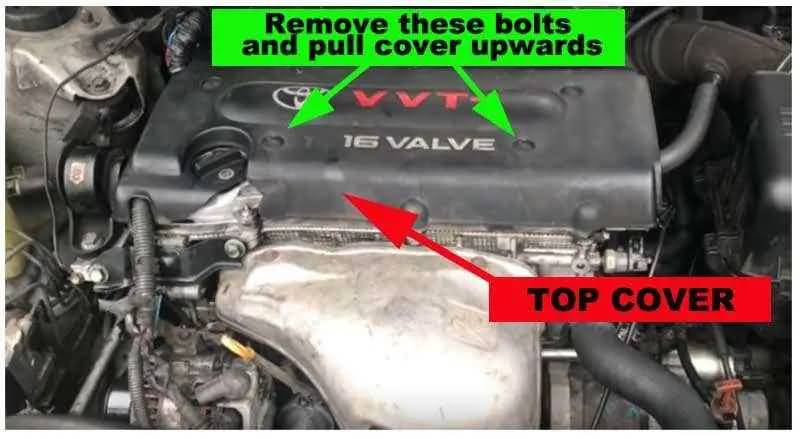
Remove engine top cover Toyota RAV4
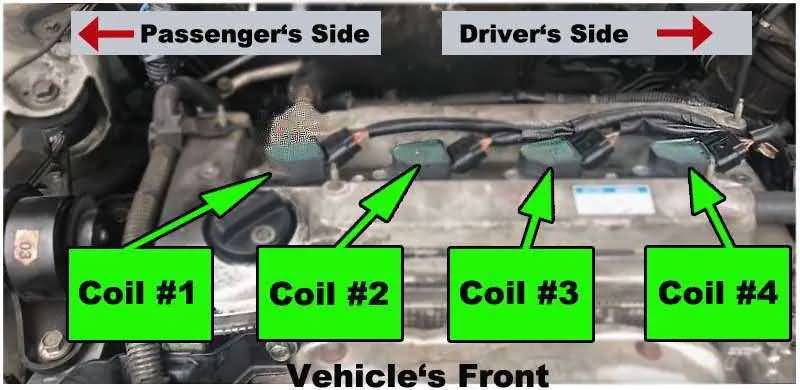
Identifying ignition coils in Toyota RAV4
Part Numbers
The following are the genuine part numbers for ignition coils of the 2001-2005 Toyota RAV4 (2.0L, 1AZ-FE engine or 2.4L, 2AZ-FE engine). The same part numbers also apply to the 4-cylinder versions of the 2006-2008 RAV4 (with a 2.4L, 2AZ-FE engine). All these numbers are interchangeable:
90080-19023
90919-02243
90919-02244
Ignition Coil Replacements
This is the most important part of this document. Once you diagnose a failing coil(s), you will probably look for the best prices on replacement ignition coils, either locally or online. Of course, we all want the best quality at the best price, and that is perfectly OK. As long as you look for OEM (genuine) ignition coils made by Denso, you won’t have any problems. The MSRP (Manufacturer Suggested Retail Price) of EACH coil is over $100.00, as shown below, but that is only that, the MSRP. You may find genuine coils at online marketplaces like eBay and other online shops at much better prices.
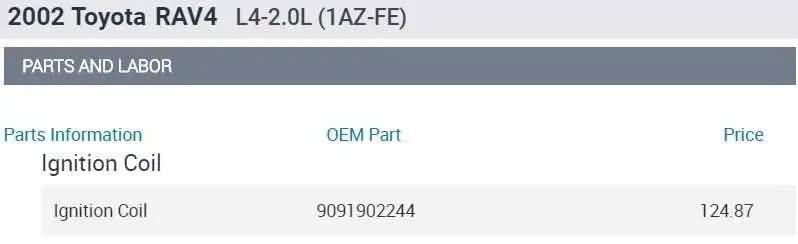
RAV4 ignition coil MSRP
All replacement (non-OEM) ignition coil types that we have tried so far in a couple of years, especially the Chinese replacements, have failed after some months, some failed in just hours of use, and some others failed almost instantly.
We did on-bench tests on some of those replacement coils, and the high-voltage output (for the spark) was not only lower than normal, but they lasted for seconds only before dying completely. The high voltage generated by the genuine (OEM) coils is definitely higher and lasts more than a decade.
Since the replacement coils produced a lower voltage than needed, they may also cause misfires, just like the failing coils were. Incomplete combustion will result in decreased engine power, lower fuel economy, and richer, more toxic emissions.
These parts are not just ignition coils. The assembly includes the ignition coil, the amplifier circuit (integrated or in an individual igniter module), and the coil feedback circuit, all embedded in a single unit. The drive pulses’ voltage and current values are very specific and are produced by the ECM (Engine Control Module). So a replacement ignition coil must have the same specific electrical properties and other specifications as the genuine coils.
So, how do you know which ignition coils to buy when all sellers put “OEM” or “Genuine” on everything they sell today?
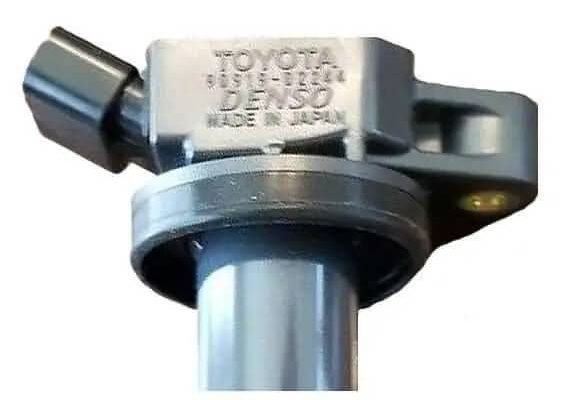
On the internet, you will find stores that will sell genuine parts for reasonable prices. You just need to know how to recognize genuine parts from replicas. You can never be 100% certain of something just by its looks, but this may help when you are searching for genuine Toyota coils. OEM ignition coils will always have “Toyota”, “Denso”, or both names on a flat surface of the assembly. The letters and numbers will be NEATLY written in relief (not engraved) and not just painted or printed. The picture below shows what the genuine part looks like.
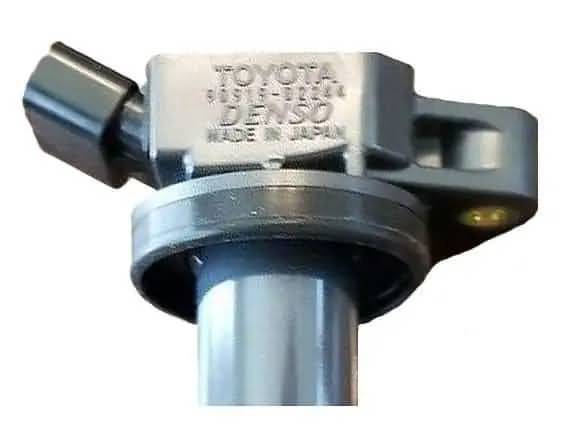
Genuine Toyota Denso ignition coil
Non-genuine coils are often completely blank (no numbers, no name), and some have only the part number engraved, no trademark, or nothing else. The color tone (dark gray or light gray) says nothing about whether the part is genuine, as the OEM manufacturer may use slightly different colors when manufacturing a new lot. Below are some classic examples of replicas, but there are many more:
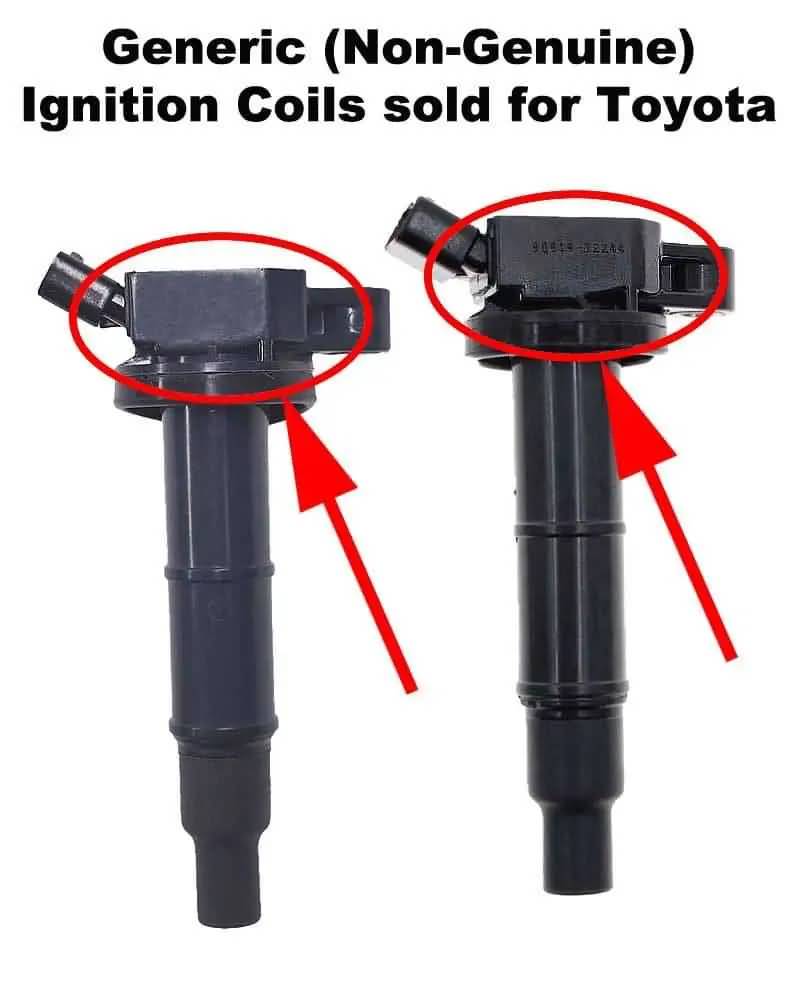
Below is an example of the generic ignition coils sold for Toyota and other cars. Some are sold as “High Output” or some other fancy name that would suggest superior performance. These are clearly sold as a non-genuine replacement, but you should stay away from those, too. They are the same Chinese coils, just painted in vivid colors. Some parts dealers compensate for the bad quality by giving a “lifetime warranty”, but for many people, making trips to the dealer for replacements is more than inconvenient, let alone the fact that a bad replacement may hurt your car’s electronics, or even mechanically.
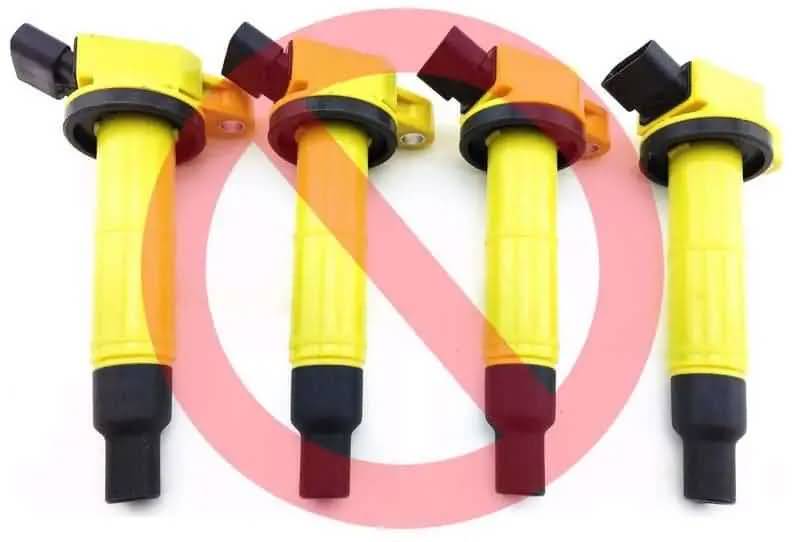
Avoid these ignition coils on Toyota cars
Refurbished Coils
No matter how good an ignition coil looks in a picture, if the coil is marked as “Used“, “Rebuilt“, or “Refurbished“, as I commonly see some sellers doing on some marketplaces, please understand that buying used coils is like buying a used disposable battery with uncertain use and no idea how much of its charge is left. It may work or it may not. If it works, you won’t know how long it will last before it fails. You won’t know how much of its lifespan is left.
If you think of it, “Rebuilt” or “Refurbished” ignition coils, who rebuilds or refurbishes an ignition coil??? To do that, it must be taken apart and the internals repaired or replaced. These coils are sealed. They just call it “refurbished” and clean or paint the part. I have also seen “tested for quality before shipping“. The only way to test quality is to install it in a vehicle and test it, or use a test rig on a bench. Bench tests will only tell you about functionality in that instant, if they ever do such “tests”. Quality means (1) the correct voltage output, (2) it won’t misfire, and (3) it will withstand heat and vibration and its own generated high voltage while lasting years.
If the story is something like “they are almost new, but the car was wrecked soon after I replaced them” or something like that, you may take the chance if it is at a rock-bottom price, so you won’t lose much if the coils fail.