Injectors Problem of the 2007 BMW 335i Using the MSD-80 DME
INJECTOR PROBLEMS IN THE 2007-2009 BMW 335i
There are already lots of articles on the Internet about this, but I just wanted to add my perspective.
MODEL AFFECTED
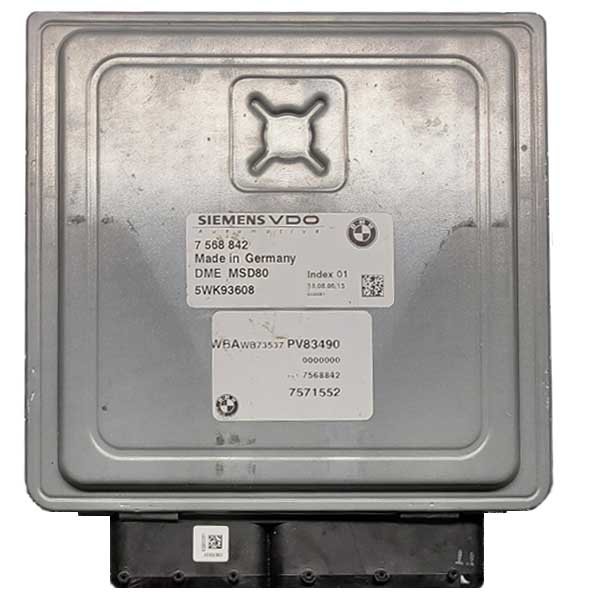
Several times, it has been brought to me some ECMs coming from the BMW 335i models, specifically the 2007-2009 335i. The ECM (DME) is the MSD80 by Siemens. Other numbers are 5WK93608 or 7568842 (7 568 842) and others, depending on the year of manufacture.
ISSUE
The most common problem with this car model is having problems with the injectors. This car uses piezo-electric injectors, which are injectors driven by crystals, like quartz, that slightly move when an electrical potential is applied to them, rather than the magnetic movement when using coils, as is the case with regular injectors.
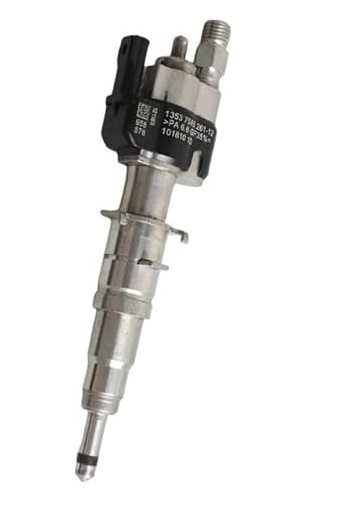
CONCEPT
The concept of this method is that piezo-electric crystals can be physically altered (slightly moved) by applying an electrical potential to them. In these injectors, a stack of crystals in series is used to make that movement more significant. The piezo-electric concept is not new. In fact, piezo-electric injectors are commonly used in diesel engines.
Applying a voltage to the piezoelectric crystals will “move” them, but the same happens in the opposite way; if it is hit hard and sharply in a short time, it will then generate a voltage in turn.
A simple example of this voltage-generating property of piezo-electric crystals is commonly seen in the long handheld lighters that generate a spark when you push the trigger to start a gas stove, for example. Those lighters have a piezo-electric piece inside that, when hit by a spring-loaded small hammer when you push the trigger, generates a high enough voltage to produce a spark in its output gap, igniting the contained butane gas.
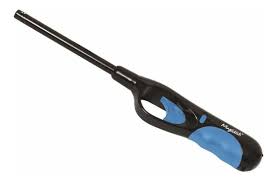
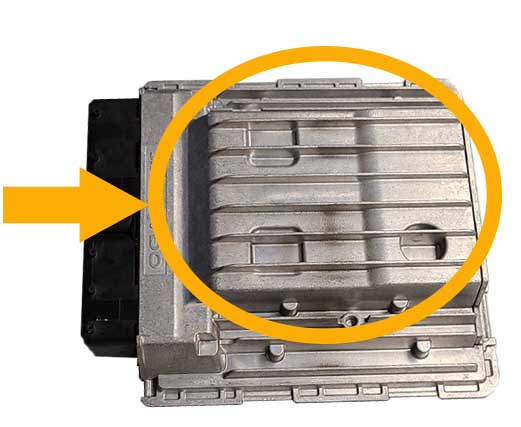
For the piezo-electric injectors to work properly, since it consists of a stack of crystals rather than a single crystal, the 12 Volts supply from the car battery is not enough to control the movement of the injector’s needle. That is why the ECM contains an internal inverter, to generate from 80 Volts to 150 Volts out of the 12 Volts from the battery, to be applied to the injectors by means of electronic switching inside the ECM.
Here, the bulge in the top part of the ECM is where the internal inverter is located.
Here is where the same inverter is located in the interior. Shown here is the bottom part of the inverter’s circuit board.
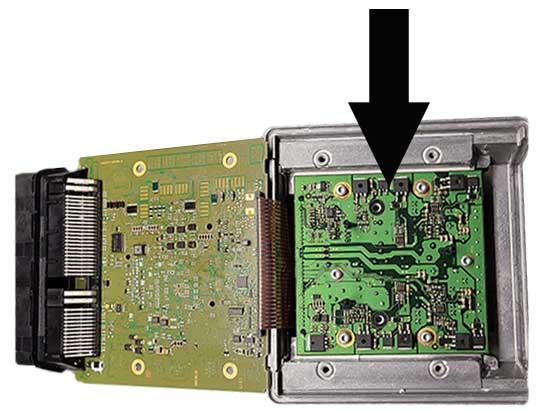
And here it is showing the top part of the inverter’s circuit board
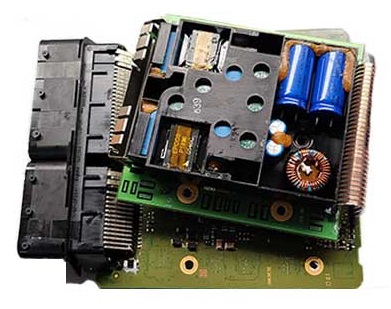
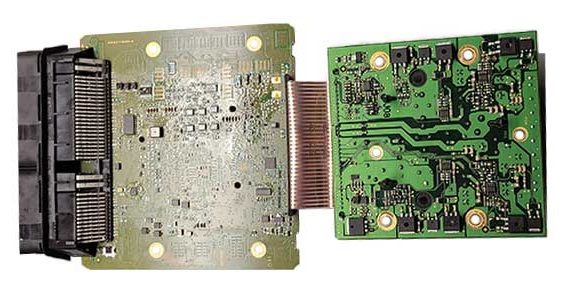
ECM (DME)
The most common failure that causes this problem is the ECM, having one or more shorted MOSFETs. Relatively high voltages and heat can cause one or more of those MOSFETs to blow, or more often, short-circuit. But some aftermarket modifications will do too. So, for troubleshooting the injector problem with these models, you should first check if you have any aftermarket modifications in your car that may conflict with the injection system, and then check the ECM for damaged MOSFET transistors.
NOTE: Replacing your MSD80 ECM with an MSD81 is the solution many owners opt for. The MSD81 was apparently built with a solution to the current issue of the MSD80 in mind. This is completely up to the owners if they wish to follow that venue. I have no experience with the MSD81 so far, and cannot comment on what modifications or improvements were implemented to avoid this very common problem with these models.
Injector switching is done by eight MOSFET transistors in the ECM, as shown in the simplified circuit below. Gossip has it that in the MSD81, they are using IGBT Transistors instead. Back to the MSD80, six of those MOSFET transistors will individually switch each one of the six injectors to ground (low side), while the other two MOSFETs will switch two banks of three injectors each, to the supply voltage (high side).
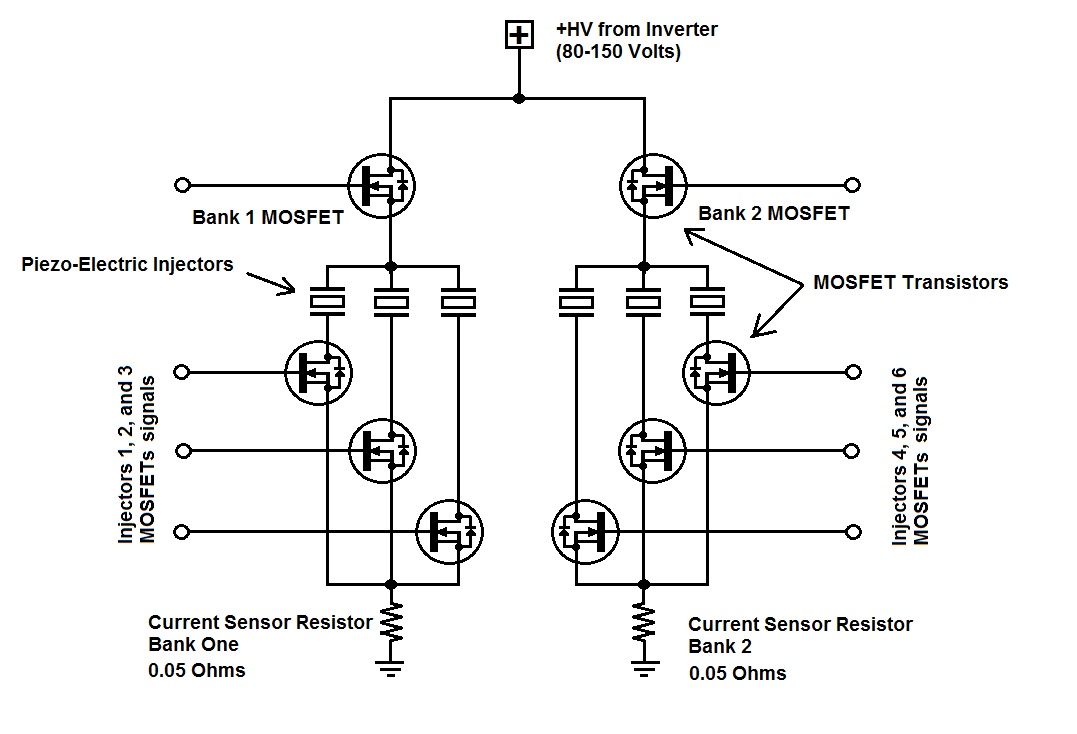
As shown above, each bank of three MOSFETs (for 3 injectors) is monitored individually for proper functioning by a current-sensing resistor. This means that if something happens to any of the three MOSFETs of one bank, the overload will be detected by the current-sensing resistor of the corresponding bank, and the bank will be switched off completely by one of the two highside MOSFETs, and consequently, the three corresponding injectors of that bank will stop working all at the same time. And yes, if two MOSFETs that are from different banks fail, none of the six injectors will work, causing a no-start condition to the car.
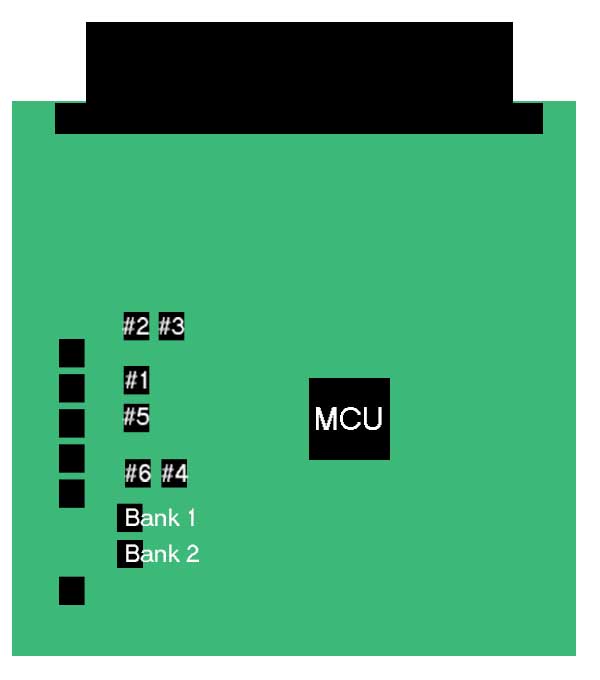
In the picture below, you can identify the MOSFETs easily. They are shown as soon as you remove the lid of the ECM. Here is a guide for identification. The MOSFETs in the green square are the 6 low-side switching MOSFETs, the ones in the white square are the bank A and bank B high-side MOSFETs, and the ones in the red square are the ignition coils drivers, where IGBTs are used instead of MOSFETs.
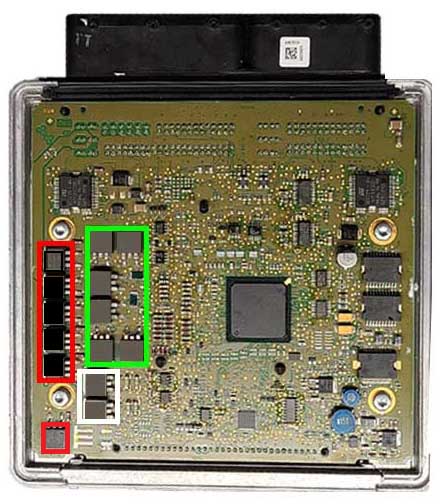
In the image below, the assignment of the MOSFETs for the specific injectors is more detailed:
PREVENTING FUTURE FAILURES
Since this problem is so common, a good idea would be to use MOSFET transistors with better specifications that can help withstand the conditions in which they are working. That means MOSFETs with higher current ratings (amperes), as well as better voltage ratings. Also, you should consider the MOSFET “ON resistance” of the replacement. It can be lower, but never higher than the original MOSFET resistance. The original MOSFET transistor used in the MSD80 is the IRFW644B, and you can directly replace it with the ISL9V5045S3ST, for example, or the FDB14N30 as suggested in an internet search shown below:
(A kit is already put together to replace all 6 MOSFETs with tougher ones – MSD80 Upgraded MOSFET Kit
“The original MOSFETs in the BMW MSD80 DME (Digital Motor Electronics) for N54 engines were prone to failure, commonly identified as W644B or similar types, leading to misfires (DTCs 30BA/30BB). These are typically replaced with upgraded, higher voltage MOSFETs like the FDB14N30 or F644NS, offering better heat/voltage tolerance for reliable injector and coil control in tuned or stock vehicles.”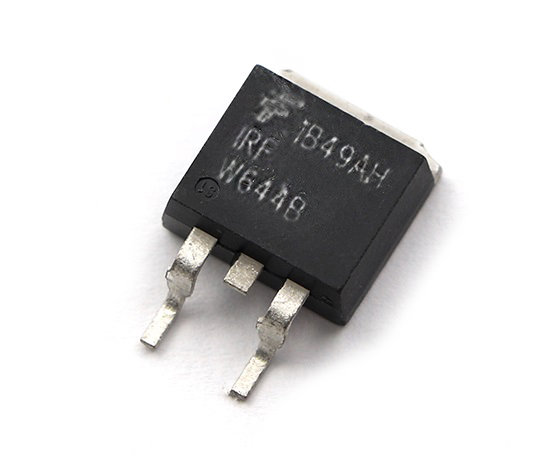
If you have any aftermarket modifications, you must be certain that they are not affecting or causing the problem in any way.
INJECTORS
Check the injectors by measuring their resistance. This resistance measure is not the ultimate test, but it can help find a damaged injector.
If you measure the injectors of these BMW models with an ohmmeter, you should have a reading of a relatively large resistance value, in the range around 10 kilo-ohms (10,000 ohms) or more. If you see a relatively low reading, like 200-300 ohms, for example, that could mean that the injector(s) in question could be bad. This measurement should be done directly from the injector’s terminal with the harness disconnected to avoid measuring any parallel resistance from the wiring or the ECM itself.
Refurbished index-12 injectors are sold at a discount price in case one or more of your injectors are faulty.
SUMMARIZING
When troubleshooting injector problems with your BMW 335i, with an MSD80, the first thing to work with is the ECM because in these cases, a shorted MOSFET(s) is the most common problem. Then the injectors’ resistance and wiring should be checked next. Remember that these injectors are switched with relatively high voltage (80V to 150V), and the wiring and the injectors themselves are more susceptible to damage in the high temperature, high voltage, and moisture environments they work, let alone any modification that may conflict with the circuit, like using incorrect injectors.
If the ECM is repaired and all works well, but the problem comes back after maybe a few days, you could have a failing injector(s) or injector wiring in a way that was not detectable in the previous resistance tests. In this case, injector(s) replacement is the next step to take, after repairing the ECM if it has been damaged for the second time.